Archive for year: 2026

From Morning Swim to Long Dinner

The best days by the water are the ones you don’t have to plan around. You wake early, while the sea is still flat and the light is the colour of weak tea, and you go in before you can talk yourself out of it. By the time you climb back up the path, the morning has already decided to be generous. What you are wearing then is, more or less, what you will be wearing when the last plate is cleared. That is the whole trick of a coastal day, and the whole point of dressing for one.

The Morning, Unhurried

Linen earns its reputation in the first hour. Wide-leg trousers thrown on over a still-damp swimsuit, a wrap top tied loose, a pair of flat sandals that have seen three summers and are better for it. Nothing here is precious. You can sit on a low wall, lean against a sun-warmed door, carry coffee and bread back from the place that opens late and never apologises for it. The fabric creases, and the creases are part of it โ€” proof of an easy morning rather than evidence of neglect.

This is what we mean when we talk about clothes that ask nothing of you. They do not need managing. They do not flinch at salt or sand or the back of a borrowed chair. You forget you are wearing them, which is the highest thing an outfit can do for a day that wants your attention elsewhere.

Small Shifts, Long Afternoons

The day turns slowly, the way good ones do. The wrap, re-tied a little higher, reads differently by mid-afternoon. The sandals are swapped for something with a touch more intention. Later, as the air cools, a linen layer goes over the top โ€” a camp shirt left open, a light overshirt that smells faintly of the morning. None of it is a costume change. It is the same self, edited by degrees, the way the light edits the hills behind the harbour.

Versatility is not owning more. It is owning the right few things and trusting them to keep up with you.

This is the quiet case for the coastal capsule โ€” for buying fewer, better pieces that move with the hours instead of dividing the day into outfits. A single considered top, a trouser that goes anywhere, a layer for when the sun drops. The Sand Edit was built around exactly this: a small, warm wardrobe that stretches across a long day without ever drawing attention to the effort.

When the Table Fills

By dinner you have done nothing but live in your clothes, and they have repaid you for it. The table fills slowly, the way tables do when no one is in a hurry to leave. Candles, eventually. The same linen, now soft with the whole day in it, sitting easily among glasses and conversation that runs long.

That is the version of dressing we keep coming back to โ€” not the outfit that performs, but the one that simply stays. You stop noticing it somewhere around the second swim. You remember it, faintly, only when you fold it away at the end and find it ready for tomorrow.
The Off-Duty Edit

There is a particular hour on a slow morning when the day has not yet decided what it wants to be. The coffee is going cold by choice. The light has moved across the floor and you have not moved with any urgency to meet it. Nothing is asked of you, and so the question of what to wear becomes, briefly, an honest one. Not what will impress, not what the meeting demands, but simply what you would like to be wearing when the hours are entirely yours.

It is tempting to treat these days as a holiday from effort. We reach for the most defeated thing in the drawer and call it comfort. But comfort and surrender are not the same. Off-duty is a standard, not the absence of one. It is the discipline of looking like yourself on a day when no one is watching closely, which is, if anything, the harder test.

The Honesty of Linen

Linen has no interest in flattering you falsely. It creases the moment you sit, it softens with every wash, and it refuses to hold a line it does not believe in. This is precisely why it belongs to the unhurried day. A camp shirt in natural linen, open at the collar, breathes in a way that synthetic ease never manages. It moves air. It moves with you. Paired with linen shorts on a warm stone terrace, it asks nothing and gives everything โ€” the rare garment that improves as the day goes on, gathering the soft architecture of having been worn.

The wrinkles are not a flaw to be ironed out of existence. They are the record of an afternoon spent well.

Soft Tailoring, No Pinch

The off-duty wardrobe still wants structure, only structure that has loosened its grip. A jacket cut without a stiff lining. Trousers that sit easy at the waist and never remind you of their presence. Knitwear that holds its shape across a long lunch and a longer conversation, then forgives you when you push the sleeves up. This is tailoring that has learned to relax without losing its mind โ€” the difference between a garment that fits and a garment that fusses.

The best off-duty pieces are the ones you forget you are wearing, until someone remarks that you look well, and you realise you have done nothing at all.

Fewer Things, Worn Often

There is a version of this edit that lives entirely in a small drawer: a few pieces in sand and ecru and clay, chosen because they sit beside one another without argument. The coastal capsule is not a uniform but a vocabulary โ€” enough to say what you mean on a quiet day, and no more. You do not dress up for it. You do not dress down. You simply dress, with the same care you would give any other day, because the days that ask nothing of you are not lesser days. They are often the ones you remember.

And so the standard holds, gently. The shirt softens, the light shifts, and you are exactly where you meant to be โ€” which is nowhere in particular, dressed for it perfectly.

In Praise of Sand, Ecru and Bone

By eleven o’clock the terrace has gone the colour of weak tea, and everything pale on it seems to lean toward the sun. A bone-coloured sleeve. The chalk of a wall. The light does not so much fall on these things as settle into them, the way warmth settles into stone. You notice, after a while, that the palest things in a room are rarely the quietest. They are simply the most patient.

The Colour of Almost Nothing

Sand, ecru, bone. Said aloud they sound less like colours than like things found on a long walk โ€” and perhaps that is the point. These are the neutrals that refuse to announce themselves. Ecru is what white becomes when it relaxes; bone is the warmth left in a shell after the sea has gone; sand is every shade of afternoon at once. None of them competes with a face, a horizon, or a good meal. They are the considered choice of someone who has decided that the clothes need not do the talking.

There is a discipline in this that masquerades as ease. To wear almost nothing โ€” colour-wise โ€” is to trust the cut, the cloth, the way a linen trouser breaks at the ankle. The Sand Edit sensibility is built on exactly that trust: fewer decisions in the morning, more attention to how a thing is actually made.

How Pale Things Age

The great secret of these tones is that they improve with time. A bone camp shirt softens at the collar and looks better for it. Ecru linen, washed and worn and dried in real air, arrives somewhere gentler than where it began โ€” the creases reading less as wrinkles than as a record of being lived in. Stronger colours fade and feel diminished; the palest ones simply mellow, the way a wall or a worn step does. They were never trying to be new, so they cannot be made to look old.

The palest things keep no secrets and tell no lies; they only hold the light a little longer than everything else.

Quietly, With Everything

Then there is the matter of getting dressed. A drawer of sand and ecru and bone is a drawer that has already agreed with itself. Nothing clashes when nothing insists. A ribbed tank under a linen skirt, a knit thrown over the shoulders for the cooler end of the evening โ€” the pieces fall into conversation without being asked. This is the off-duty logic of a coastal capsule: a small, warm-toned company of things that travel together, layer together, and ask very little of you in return.

Choose the palest neutrals and you are, in a sense, choosing the background โ€” letting the day and the people in it carry the colour. There is a generosity in that. As the light goes long and gold over the terrace and someone calls everyone in to dinner, the bone and the sand and the ecru simply hold the last of it, and let the evening do the rest.

The Case for Fewer, Better Tees

There is a particular morning shape to a good tee. It is the thing you reach for before the coffee has fully done its work, before you have decided what kind of day it will be. You pull it on without thinking, and that is rather the point โ€” the best ones never ask to be considered. They simply sit right, soften with washing, and go on quietly being there.

The Drawer Tells the Truth

Most of us own too many tees and wear three of them. The rest live folded, untouched, the cotton already gone thin and papery after a season, the neckline slack and curling. They were never meant to last; they were meant to be replaced. And so we keep replacing them, and the drawer fills with near-misses.

The alternative is less romantic than it sounds and more satisfying than it has any right to be. A handful of tees, chosen properly, worn often, washed gently, kept for years. Fewer decisions in the morning. More room in the drawer. A sense, faint but real, of having stopped feeding something that was never giving anything back.

What to Look For

Start with weight. A tee that feels almost weightless on the hanger will feel like nothing on you in the worst way โ€” translucent, clingy, finished by autumn. A medium-weight cotton, something with a little body to it, drapes instead of clings and holds its shape through a long day. You can feel the difference the moment you lift it.

Then the neckline, which is where cheap tees fail first. Look for a collar that is ribbed and snug, stitched to return to itself after it stretches. A good crew sits flat against the collarbone; a good neckline, a year on, still does. This is the detail that separates a tee you keep from a tee you quietly retire.

And consider how it will age, because it will. Honest cotton softens rather than dissolves. It takes on the faint character of the body that wears it and the wash it goes through, fading by degrees into something better than new. That slow settling-in is not wear and tear. It is the garment becoming yours.

A good tee is the most-worn thing you own and the least-noticed. That is exactly its job.

The Foundation Under Everything

This is the layer beneath the linen trousers and the camp shirt, the thing the coastal capsule quietly rests on. Off duty, it is the whole outfit. On the days that ask a little more, it is the calm beginning everything else is built over. Either way it does its work without comment, which is the highest thing a plain garment can do.

Buy fewer of them, then. Buy the ones that feel like something in the hand. Wear them until they have learned your shape, and they will keep on being the easiest decision of the morning โ€” long after you have forgotten you made it.

Degree show opens this Friday

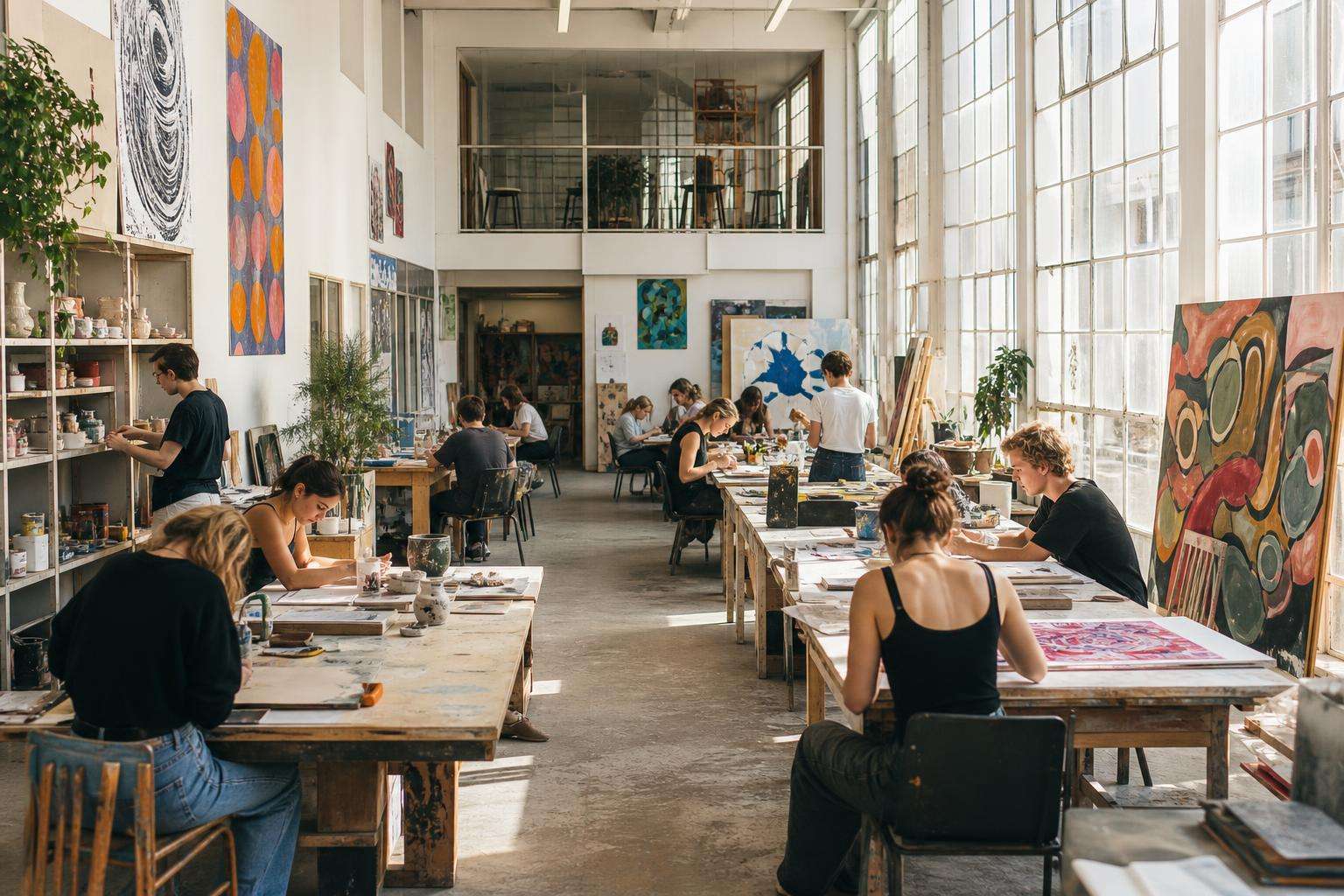
Every studio clears out for it. For one week at the end of April the kilns go cold, the screen beds are scrubbed back to bare mesh and the stages are struck, and three floors of the building become a single exhibition of the work our leavers made this year. It is hung by the students who made it, and for most of the nine days they are in the room beside it, ready to tell you how any of it was done.

The show opens on Friday 1 May at six in the evening and runs until Saturday 9 May. It is free, there is nothing to book, and it is open to anyone: families, other schools, people who live on the street and have always wondered what goes on behind the long windows on the corner.

What is in it

Around ninety leavers are showing, from the sixth form and the Portfolio Year. Each has a wall, a plinth, a screen or a booth, and each chose what goes in it. Some are showing a single piece they have worked on since September. Others are showing thirty small things, because the thirty small things were the point.

  • Ceramics fills the ground floor, including the first pieces out of this spring’s wood firing.
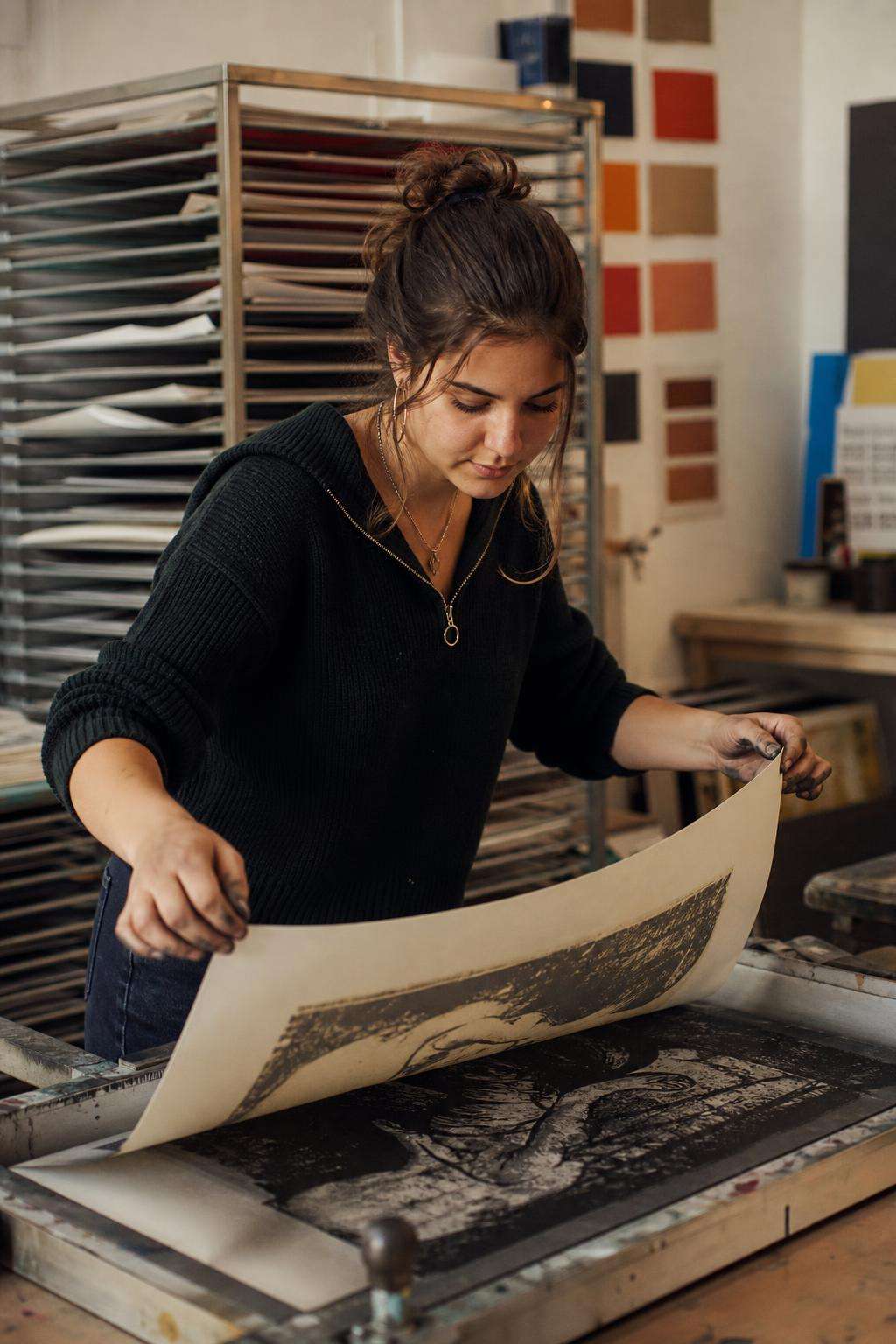
  • Print and metal takes the long gallery: etchings, screen prints and two forged pieces that needed four people to carry up the stairs.
  • Moving image runs in both blackout stages, on a loop, with a printed timetable at each door.
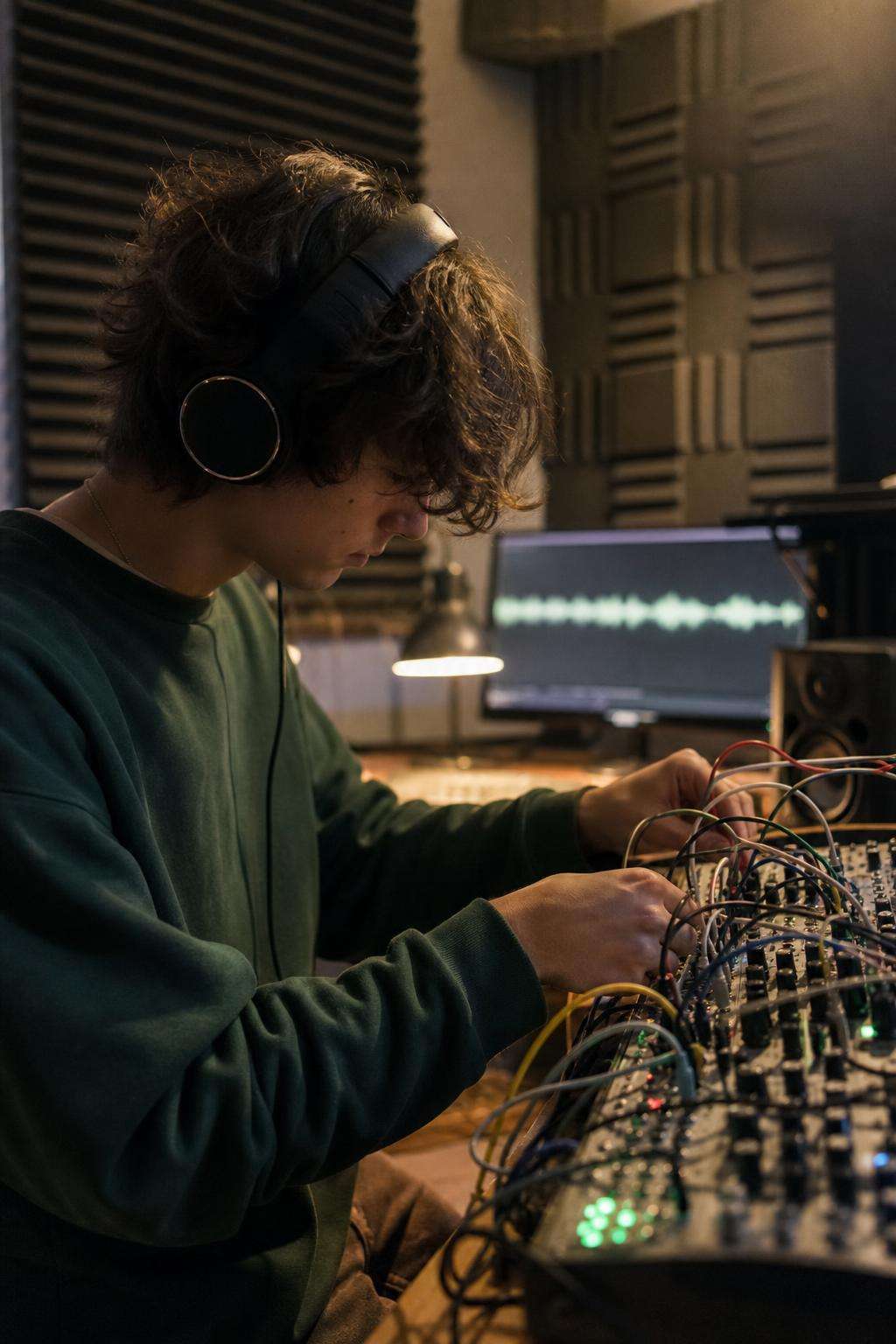
  • Sound is in the booths and the live room. Headphones are provided; the live room is not quiet.
  • Painting, drawing and textiles share the main hall, which is the room most visitors remember.
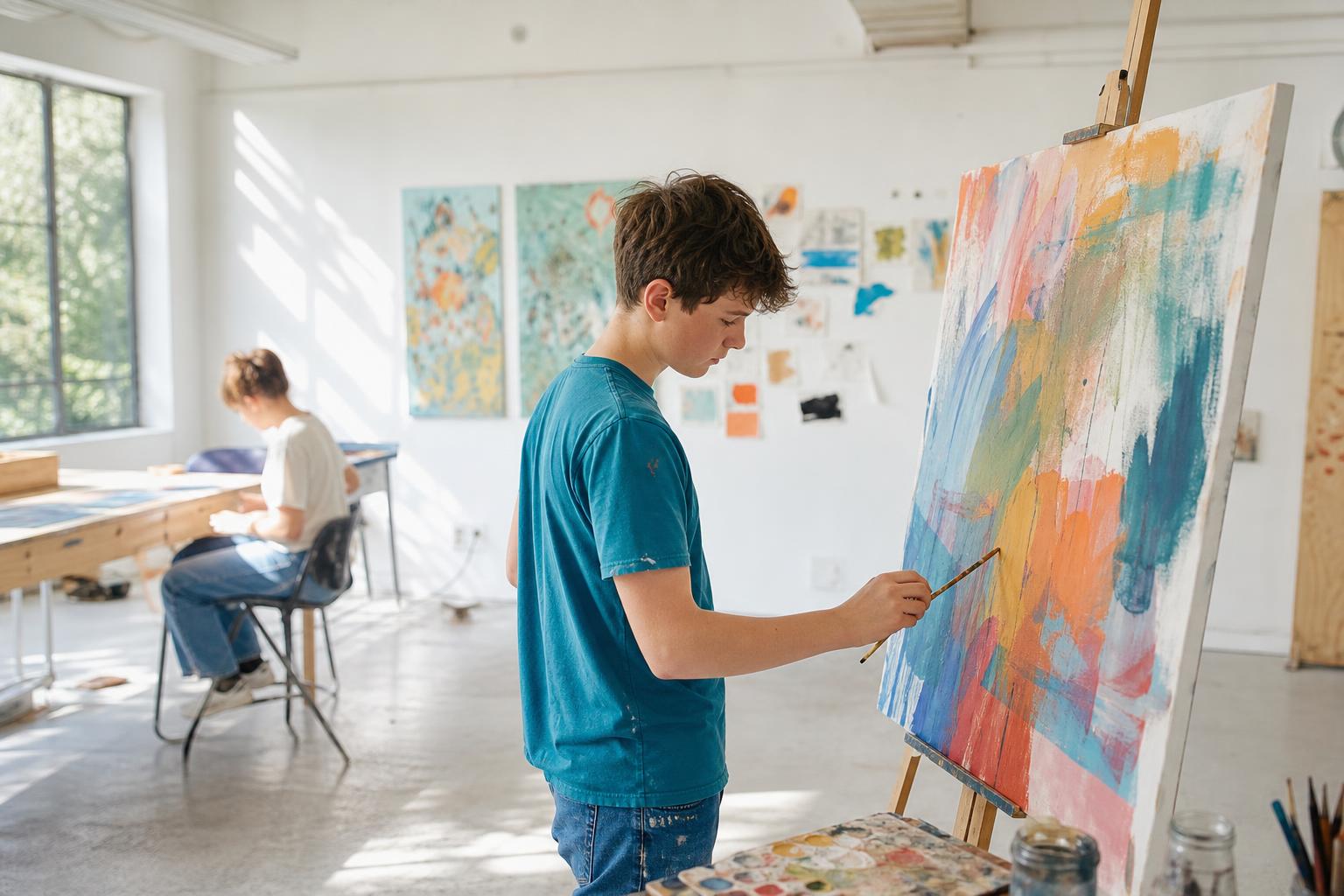
A student painting at an easel in a bright studio
The last week in the painting studio. Much of what hangs on Friday was still being changed on the Tuesday before.

Hung by the people who made it

There is no curator. The technicians put up the walls and run the power, and after that the hang belongs to the students. They measure, argue, move each other’s work by a few centimetres and move it back. It takes most of a week, and it is one of the few times the whole year group works on the same thing at the same time.

It is also, quietly, the last lesson of the year. A piece that looked finished in the studio can look unfinished on a white wall under proper light, and there is still time to do something about it. Several of this year’s leavers did.

Nobody here hangs your work for you. If it looks wrong on the wall, that is the last thing the school has to teach you.

Adam Holloway, Head of School

When to come

DayOpenWhat is on
Friday 1 May6pm – 9pmOpening evening. Every maker is in the building.
Saturday 2 to Tuesday 5 May10am – 5pmThe show, with students on every floor.
Wednesday 6 May10am – 9pmLate opening, workshops lit.
Thursday 7 to Saturday 9 May10am – 5pmThe show. It closes at five on the Saturday.
Nine days, free, no booking.

The Wednesday late

On Wednesday 6 May the building stays open until nine and the workshops downstairs are lit, with a technician in each. It is the best evening to come if you want to see how the things upstairs were actually put together: the kiln room, the etching press, the grade suite, the booths with the patch cables still in them.

Coming with children, or with a portfolio

The show is a good first visit for families thinking about the school, because nobody is performing for you. On the Saturdays someone from Admissions is on the front desk from ten until four, and will happily walk you round, answer questions about entry or just point you at the room your child keeps drifting back to.

If you are applying yourself, come and look at what the Portfolio Year produces. It is the clearest answer we can give to the question of what the year is for.

Do I need to book?

No. Walk in during opening hours. Groups of more than fifteen are asked to email ahead so the students on duty know to expect you.

Is the whole show accessible?

Yes. There is a lift to all three floors, and the stages and booths have step-free entrances. The live room is loud; ear defenders are at the door.

Can I buy work?

Some of it. Where a maker has chosen to sell, a price is on the label, and everything goes to the maker except a small amount for next year’s materials fund.


Most of what is on the walls started as something else in September. Come and see what it turned into.

Two shortlisted for the Kiln Prize

The Kiln Prize goes to work in fired clay by anyone under nineteen, and it is judged blind: the panel sees the piece and a hundred words from its maker, and nothing else. No names, no schools, no portfolios. Two of the six pieces on this year’s shortlist came out of our ceramics studio.

They belong to Maya Okafor, in the sixth form, and Theo Lindqvist, in the Portfolio Year. Neither of them made the piece they set out to make, and both of them rebuilt their work more than once before it went to the judges. That, as it turns out, is the part of the process the prize tends to reward.

Judged blind

Entries arrive from art schools, sixth-form colleges, community studios and a surprising number of kitchens. Around four hundred were submitted this year. The panel, three working potters and a curator, narrows them to six over two days in a room with the entries on trestle tables and the labels turned face down.

Because the judging is blind, the shortlist is the first moment anyone outside the studio knows whose work it is. Maya found out in a Wednesday critique, when a technician walked in holding a letter and the room stopped talking.

Neither of them made the piece they set out to make. Maya’s cups were supposed to be a single jug. Theo’s vessel collapsed twice on the wheel. The finished work is better because of both of those things, and the judges could see it.

Nadia Bergström, ceramics technician
A student in an apron in front of shelves of unfired pots
The ceramics studio shelves. Everything on them is waiting for a firing.

Two pieces, rebuilt

Maya Okafor, sixth form

Maya’s entry is a set of eleven cups, thrown in porcelain and glazed in a single pale celadon, each a little shorter than the one before. It began in October as a jug. The jug would not hold its handle, and after the third attempt she cut the body into rings to see where the wall was failing, liked the rings more than the jug and started again with cups.

The set took four firings to get right. The first glaze crawled, the second was too green, and the third cracked two of the cups in the kiln, which is why there are eleven rather than twelve. Her hundred words for the judges end with the sentence: the missing cup is part of the set.

Theo Lindqvist, Portfolio Year

Theo’s piece is a single tall vessel, just under a metre, fired in the school’s wood kiln. It collapsed twice on the wheel at full height, so the version that survived was built in three thrown sections and joined when leather hard. The joins are still visible under the ash glaze, and he decided to leave them that way.

A student holding a large thrown pot in the ceramics studio

Four firings a year

The wood kiln is fired four times a year over two-day shifts, and anyone who has work in it takes a turn at stoking through the night. Theo’s vessel went into the spring firing.

  • Lit at six in the evening
  • Stoked in two-hour shifts
  • Held at temperature for a day
  • Opened after three days of cooling

What happens next

  1. All six shortlisted pieces travel to the prize exhibition in June, where they are shown alongside a selection from the long list.
  2. The judges see the six pieces together, in person, for the first time.
  3. The winner is announced at the opening, and receives a bursary for materials and a week in a working pottery.
  4. Every shortlisted piece is shown for a month afterwards, and then comes home to the studio.

The missing cup is part of the set.

Maya Okafor, from her statement for the judges

Whatever happens in June, both pieces will be back on the ground floor for the degree show, and both makers will be in the building to talk about them. The ceramics studio is open to anyone who knows how to use it until ten every night, and the wheels are rarely all free.


Sound artist Ada Reyes joins us

Ada Reyes joins the digital studio this week for six weeks, working with the sixth form and the Portfolio Year on field recording and composition for installation. She is the third visiting practitioner this year and the first to work in sound.

Her own work is mostly made outdoors, recorded over long walks through places most people drive past, and finished in a room she describes as the size of a cupboard. She says that is the only honest way to describe most studio practice, and she intends to spend six weeks proving it.

Six weeks, in three parts

  1. Weeks one and two: listening. Recording walks around the school and the streets near it, with a portable recorder each and one rule: record for twice as long as feels necessary.
  2. Weeks three and four: editing. Back in the lab, cutting hours of material down to minutes, and learning to hear what was actually recorded rather than what was meant to be.
  3. Weeks five and six: installing. Each student places a finished piece somewhere in the building, for a specific spot and a specific listener.
A student in headphones working at a mixing desk in the sound lab
The sound lab, where Ada’s editing sessions run on Tuesday and Thursday afternoons.

In her words

People imagine a studio as a big bright room. Most of mine have been cupboards, and the cupboard is not the problem. The problem is going into it with nothing. I want these students to come back from a walk with too much, and then learn what to throw away.

Ada Reyes

Ada trained as a violinist, stopped playing at twenty and spent the next ten years recording rivers, car parks and the insides of empty buildings. Her installations have been shown in a disused swimming pool, a multi-storey car park and, once, a lift. She is interested in what a sound does to a room, and what a room does to a sound.

For the students, the attraction is partly the kit and partly the permission. A recorder and a pair of headphones go further than most people expect, and a piece of work that lives in a stairwell does not need a gallery to exist.

What the students are making

Eleven students signed up for the residency, from first-year sixth formers who have never recorded anything to a Portfolio Year student who has been building a modular synthesiser since September. Their starting points are already wildly different. One is recording the kiln room through a firing, from lighting to opening. Another has spent two walks under the railway bridge at the end of the road, waiting for the gap between trains. A third wants to record the building at night, empty, and play it back in the dining hall at lunch.

Ada’s only instruction so far has been to stop describing the finished piece. It does not exist yet, she tells them, and describing it too early is the fastest way to make sure it never does.

The kit

Everything the residency needs is already in the building, and the kit store lends it without a form.

  • Twelve portable field recorders
  • Contact microphones and a hydrophone
  • The modular lab and four booths
  • Speakers for installing anywhere in the school
A student patching cables on a modular synthesiser under a lamp

Open sessions

Most of the residency is for the students enrolled on it, but two sessions a week are open to anyone in the school, whatever they study.

SessionWhenWho can come
Listening walkTuesdays, 3pm, from the main entranceAny year group
Open labThursdays, 4pm – 6pmAnyone, no experience needed
Installation tourFriday of week six, 5pmThe whole school, and parents
The open sessions run for all six weeks.

Ines Moreau, who runs the kit store and the radio rota, has set aside a shelf of recorders for the open sessions. As with everything else in the store, you sign nothing: you take it, and you bring it back.

Do I need to know anything about music?

No. Several of the students on the residency have never made a sound piece before. Listening is the skill, and it is taught from the first walk.

Can day pupils come to the evening sessions?

Yes. The studios are open to every student until ten, and the open lab finishes at six.


The installations go up in the final week. If you are in the building that Friday, follow the headphones.

The spring open crit, in one room

Every studio brought its term to the main hall on Friday and stood beside it. Eleven rooms of work in one, from first-year drawings to Portfolio Year pieces, and the whole school walking between them for an afternoon and most of an evening.

The open crit happens at the end of every term. The rule is the same as the weekly critique each studio holds on a Wednesday, only bigger: you stand next to what you made and account for it, in front of everyone who did not make it. Nothing is marked. The hall was still full at seven.

How an open crit works

  1. On Thursday evening every studio clears a patch of the main hall floor and a length of wall.
  2. On Friday morning the work goes up, studio by studio, with no labels beyond a name and a year group.
  3. At two the doors open to the whole school. Lessons stop for the afternoon.
  4. Every maker stays within reach of their work until five, and anyone can ask them anything.
  5. At five staff and parents arrive, and the conversations start again from the beginning.
The Head of School at a table with two students and their work
Adam Holloway, Head of School, with two students before the doors opened.

Getting the hall ready

The main hall is a working room for the rest of the term, full of long tables, half-finished sculpture and other people’s coffee. Turning it into a place where eleven studios can show a term’s work takes most of Thursday evening. Tables go against the walls, the sculpture moves to the edges, and each studio chalks out its patch of floor.

There is always an argument about the light. The painting studio wants the north end by the windows; the moving image students want the opposite, and a corner they can black out. This year the print room lent the stages a set of screens, which is exactly the kind of thing the afternoon is for.

What people said

The questions at an open crit are rarely the ones a teacher would ask. A first-year asked a Portfolio Year student why her print was so big. A sixth-former asked the Head whether he ever made anything any more. A group of eleven-year-olds spent twenty minutes in front of a single ceramic bowl, and when they finally left, the student who had made it said it was the best feedback she had had all year.

You spend a term with a piece of work and only the people in your studio see it. Then for one afternoon, three hundred people do, and half of them are younger than you and not at all polite about it. It is the most useful day of the term.

A Portfolio Year student, in the evening

Why nothing is marked

Every term someone new to the school asks why the most public moment in the calendar carries no grade. The answer is that a mark ends a conversation, and the point of the afternoon is to start one. Students who show something unfinished are not penalised for it; they are usually the ones who get the most out of the day.

The crit is also how the studios find out about each other. The print room sees what the stages have been doing. The sound students discover that the ceramicists have been recording their kiln. Several collaborations that ended up in last year’s degree show began with a conversation on this floor.

A mark ends a conversation. The point of the afternoon is to start one.

From the school’s own guide to the open crit

The next one

The summer term closes with its own open crit in July, the week after the degree show comes down. In December the building stays open for an evening for the town, not just for parents, and a good deal of what hangs in the hall on Friday will still be in progress then.


Sound System turns thirty-five

The student radio station has broadcast from the sound studio every term since 1991, and it has been run entirely by students the whole time. This week Sound System marks thirty-five years on air with a forty-eight hour broadcast, from six on Friday evening to six on Sunday.

Every presenter who has ever had a show was invited back for an hour. Two hundred and eleven said yes, which is more hours than there are, so the rota is being settled the way it always has been: on the whiteboard by the studio door, in marker, with a great deal of crossing out.

Two students in headphones laughing at a microphone in the radio booth
Morning Shift, the station’s oldest running show, on a Monday at half past seven.

How a student station lasts thirty-five years

It is not a club with a teacher behind it. There is no staff producer and no approved playlist, and the school has never once asked to hear a show before it goes out. What keeps it going is a short set of rules, written in 1991 and taped inside the booth door, which every new presenter reads before their first show.

  • Anyone in the school can have a show. There is no audition.
  • Nobody is on air for more than an hour at a time.
  • If you say you will be there, be there. Dead air is the only thing the station does not forgive.
  • The station belongs to whoever is running it this year.

Ines Moreau, who looks after the sound studio, keeps the equipment working and the whiteboard wiped. Everything else, from the schedule to the jingles to the arguments about the jingles, belongs to the students.

Thirty-five years, in five moments

  1. 1991. The first broadcast goes out from a storeroom next to the music department, on a transmitter that reaches the end of the corridor.
  2. 1998. The station moves into the sound studio, and gets a door with a lock — still the only one on that floor.
  3. 2004. Long Player starts: one album, start to finish, no talking over the songs. It has never missed a weekend.
  4. 2012. The Crit moves from the studios onto the air, and becomes the station’s most listened-to show.
  5. 2026. Thirty-five years, forty-eight hours, and a whiteboard with no space left on it.

The schedule this weekend

ShowNormallyThis weekend
Morning Shift7:30 – 8:15am, Monday to FridaySaturday and Sunday, 7:30am, with former presenters
The Crit8:15 – 9pm, Tuesday and ThursdayFriday, 8pm, live from the main hall
Long Player3 – 4pm, Saturday and SundayBoth days as usual, one album each, start to finish
Alumni hoursNot normally on airEvery hour on the hour, Friday 6pm to Sunday 6pm
Forty-eight hours, one studio, two hundred and eleven presenters.
Three students at a microphone discussing a painting
The Crit: a student brings in a piece of work, and three others talk about it on air.

The only timetable in the school set by seventeen-year-olds.

Sound System, describing itself

Tuning in

In the building, the station plays in the dining hall, the corridors of the digital studio and, famously, the lift. Outside it, the whole forty-eight hours streams from the school site, and former presenters have been told it will be recorded, which some of them regard as a threat.

If you have ever had a show and have not yet been in touch, there is still a waiting list. It is on the whiteboard.

I had a show years ago. Can I still get a slot?

Possibly. The whiteboard is full, but presenters do drop out, and the students running the weekend are keeping a list. Email the school and ask for Sound System.

Can current students still join the station?

Yes, and they do every term. Put your name on the board. The newest presenters usually start with a Saturday afternoon.